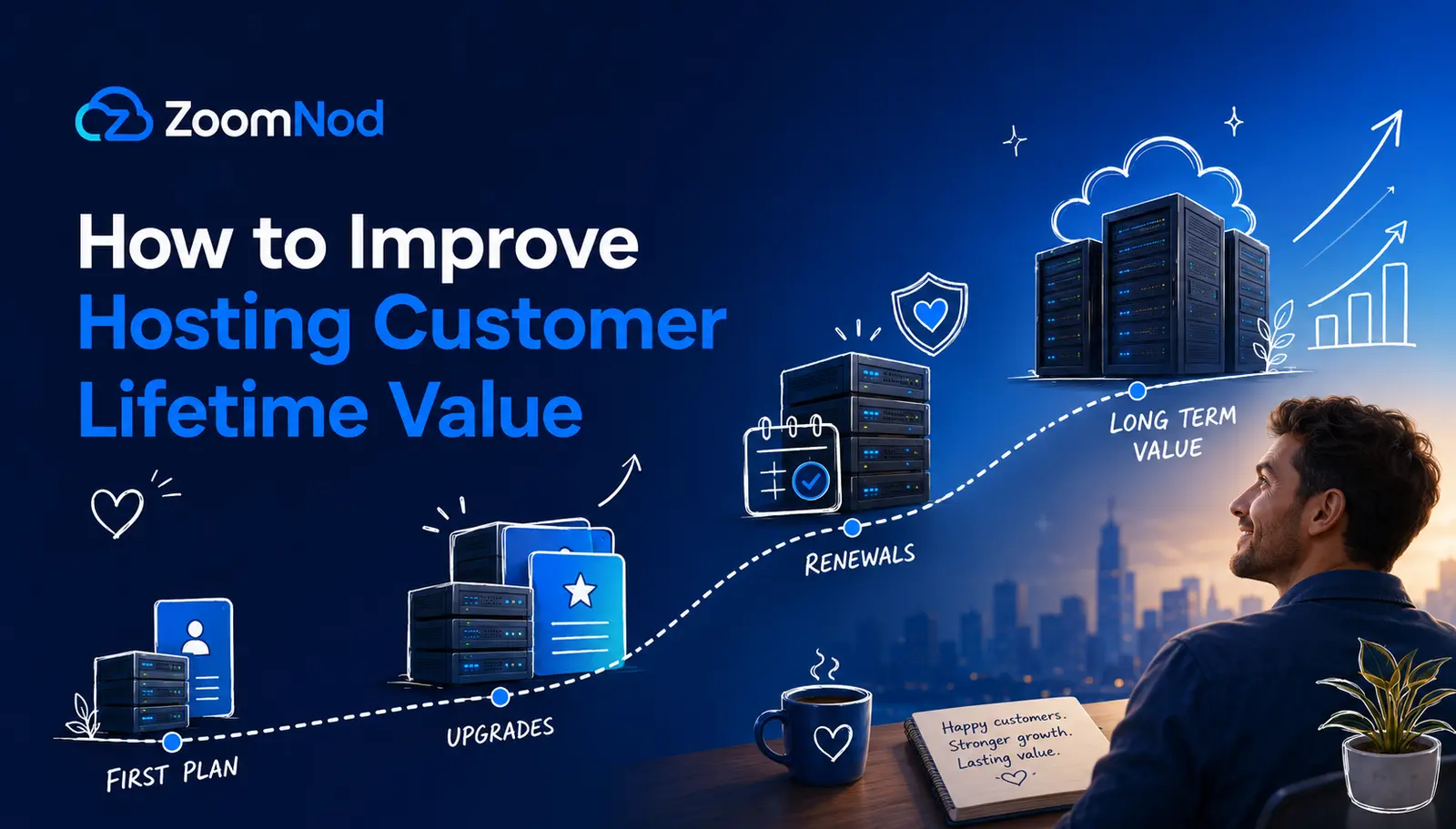
Customer lifetime value is a core commercial metric for a hosting company.
It estimates the economic value a customer may generate throughout the relationship with the business.
For a recurring revenue hosting provider, the first purchase rarely shows the full picture.
A customer may begin with shared hosting, remain for several renewal periods, move to a VPS, add backup or security services, purchase another server and eventually refer other customers.
Another customer may purchase through an expensive advertising campaign, require significant onboarding support and cancel before the company recovers the acquisition cost.
Both customers may appear as one conversion in a marketing report, but their long term commercial value is very different.
Improving customer lifetime value is not simply about charging customers more.
It requires the hosting company to attract suitable buyers, help them activate successfully, deliver ongoing value, reduce preventable churn and recommend relevant products as customer needs develop.
An effective LTV strategy connects marketing, sales, product, support, billing, customer success and finance.
Zoomnod provides specialist digital marketing for hosting companies and lifecycle growth services based on six years of hosting industry experience and work with multiple hosting providers.
Here is how shared hosting, VPS, WordPress hosting, cloud, dedicated server, agency hosting and managed infrastructure companies can measure and improve customer lifetime value.
What Is Hosting Customer Lifetime Value?
Hosting customer lifetime value, often shortened to CLV or LTV, estimates the total economic value a customer generates during the relationship with a hosting company.
The calculation may use revenue, gross profit or contribution margin depending on the company’s reporting model.
A revenue only calculation is easier to produce, but it may overstate value because it does not account for infrastructure, payment, support, migration and service delivery costs.
Hosting companies should define clearly whether their LTV metric represents gross revenue, gross profit or another measure. The same definition should be used consistently across marketing, finance and leadership reports.
- Average recurring revenue
- Customer retention period
- Gross margin
- Upgrade revenue
- Cross sell revenue
- Downgrades
- Refunds
- Infrastructure cost
- Support cost
- Payment processing cost
- Migration and onboarding cost
- Customer acquisition cost
How to Calculate Hosting Customer Lifetime Value
No single LTV formula works for every hosting company.
The calculation should match the company’s business model, billing data and level of financial detail.
Simple Revenue Based LTV
Formula: Average monthly revenue per customer multiplied by average customer lifespan in months.
Margin Based LTV
Formula: Average monthly revenue per customer multiplied by gross margin percentage multiplied by average customer lifespan in months.
Churn Based Simplified LTV
Formula: Average monthly gross profit per customer divided by monthly customer churn rate.
Example
A managed VPS customer generates an average of $80 per month, the gross margin is 65% and the average customer relationship lasts 30 months.
$80 multiplied by 0.65 multiplied by 30 equals an estimated margin based LTV of $1,560.
This simplified example does not separately account for upgrades, downgrades, migration cost, support intensity, refunds or changing customer behavior.
Calculate LTV by Hosting Product
A company wide average can obscure major differences between products.
Shared hosting, unmanaged VPS, managed cloud and dedicated infrastructure have different pricing, support requirements, margins and retention patterns.
Shared Hosting
- Low monthly revenue
- Potentially high customer volume
- Introductory discounts
- Domain and email cross sells
- Upgrade potential
- Self service support model
Unmanaged VPS
- Resource based pricing
- Technical customer profile
- Additional server purchases
- Operating system requirements
- Lower management cost
- Potential usage based expansion
Managed VPS
- Higher monthly revenue
- Greater support cost
- Migration cost
- Longer potential relationship
- Upgrade and managed service expansion
WordPress Hosting
- Website growth
- Agency or multi site expansion
- Backup and security add ons
- Staging and performance features
- Migration support
Dedicated Servers
- Higher contract value
- Hardware and bandwidth costs
- Custom configurations
- Account management
- Additional server expansion
- Longer procurement and renewal cycles
Cloud and Managed Infrastructure
- Variable usage
- Professional services
- Complex support
- Architecture expansion
- Multi region requirements
- Long sales and retention cycles
Why Customer Lifetime Value Matters for Hosting Companies
LTV helps a hosting company understand how much it can sustainably invest in acquiring, onboarding and supporting customers.
A company that knows the value of different customer segments can make more informed decisions about channels, promotions, sales involvement and customer success.
Without LTV data, the business may optimise campaigns toward the cheapest initial purchase rather than the most valuable long term customer.
- Set customer acquisition targets
- Compare marketing channels
- Evaluate promotional pricing
- Plan onboarding investment
- Prioritise customer success resources
- Forecast recurring revenue
- Identify valuable customer segments
- Design upgrade paths
- Evaluate retention programmes
- Calculate acquisition payback
Compare Customer Lifetime Value With Acquisition Cost
Customer lifetime value should be reviewed alongside customer acquisition cost.
CAC represents the cost of acquiring a new customer through marketing, sales and related activity.
A customer can generate substantial revenue and still be commercially unattractive when acquisition, support and delivery costs are too high.
LTV to CAC Ratio
Formula: Customer lifetime value divided by customer acquisition cost.
A customer segment with an estimated margin based LTV of $1,200 and an average acquisition cost of $300 has an LTV to CAC ratio of 4 to 1.
The ratio should be interpreted with payback period, cash flow, retention reliability and delivery capacity.
Zoomnod can connect LTV analysis with lead generation for hosting companies so acquisition quality is assessed beyond the initial form or purchase.
Segment LTV Before Making Marketing Decisions
A single average LTV can mask meaningful differences.
The company should segment customer value to understand which products, audiences and acquisition sources produce better long term results.
- Hosting product and plan
- Managed or unmanaged service
- Monthly or annual billing
- Customer country and server location
- Customer industry
- Business or consumer customer
- Acquisition channel
- Marketing campaign
- Affiliate partner
- Introductory offer
- Payment method
- Customer cohort
- Customer support intensity
For example, annual managed WordPress customers acquired through organic search may have a higher LTV than monthly customers acquired through a heavy discount campaign.
Improve Customer Fit at Acquisition
Customer lifetime value begins before the customer purchases.
Marketing campaigns that attract unsuitable customers can generate refunds, support pressure, early churn and poor lifetime value.
- Separate managed and unmanaged services.
- Explain technical requirements.
- Show relevant resource limits.
- Clarify included support.
- Make server locations accurate.
- Explain introductory and renewal pricing.
- Use product specific landing pages.
- Avoid targeting irrelevant broad searches.
- Qualify higher value B2B enquiries.
- Compare LTV by acquisition channel.
Review long term customer quality across SEO for hosting companies, Google Ads for hosting companies and LinkedIn Ads for hosting companies.
Improve Hosting Landing Pages and Product Selection
Customers are more likely to remain valuable when they select the right product.
Confusing plan comparisons can lead users to purchase services that are too limited, unnecessarily expensive or unsuitable for their technical experience.
- Clear target customer
- Product use cases
- Resource specifications
- Managed or unmanaged clarification
- Server locations
- Support scope
- Migration information
- Introductory price
- Renewal price
- Billing period
- Plan comparison
- Upgrade path
- Frequently asked questions
- Relevant CTA
These changes support conversion rate optimisation for hosting companies.
Increase Activation Through Better Onboarding
A customer who fails to activate successfully is unlikely to generate strong lifetime value.
Onboarding should help the customer reach a meaningful outcome quickly and should vary according to the hosting product and technical ability of the customer.
Shared Hosting Onboarding
- Confirm account access.
- Connect or register a domain.
- Install WordPress or another platform.
- Create email accounts.
- Explain the control panel.
- Configure backups.
- Show support channels.
VPS Onboarding
- Confirm server deployment.
- Provide secure access guidance.
- Explain operating system details.
- Configure basic security.
- Explain backup options.
- Show resource monitoring.
- Clarify management responsibilities.
Agency Hosting Onboarding
- Migrate the first client site.
- Add team members.
- Create staging environments.
- Explain multi site management.
- Review billing and support.
- Introduce expansion options.
Managed Hosting Onboarding
- Confirm management scope.
- Collect migration requirements.
- Introduce support contacts.
- Explain monitoring and updates.
- Set communication expectations.
- Schedule an account review.
Product specific onboarding can be automated through email marketing for hosting companies.
Reduce Time to First Value
Time to first value is the period between purchase and the customer achieving a meaningful result.
For a shared hosting customer, this may be publishing a website. For a VPS customer, it may be deploying an application. For a managed hosting customer, it may be completing a migration.
- Use setup checklists.
- Show onboarding progress.
- Send behavior based reminders.
- Offer migration assistance.
- Detect inactive accounts.
- Trigger support outreach.
- Create product specific tutorials.
- Remove unnecessary setup steps.
- Use clear customer facing language.
- Measure activation completion.
Increase Product Adoption
Customers create more lifetime value when they use the product successfully and integrate it into their operations.
Login frequency alone is not a reliable adoption metric. The company should identify actions that show meaningful use.
Shared Hosting Signals
- Domain connected
- Website published
- Traffic received
- Email account configured
- Backup enabled
VPS Signals
- Server accessed
- Application deployed
- Security configured
- Backups enabled
- Resources actively used
WordPress Hosting Signals
- Website migrated
- Staging used
- Backups enabled
- Caching configured
- Security features activated
Agency and Managed Infrastructure Signals
- Client sites added
- Team members invited
- Migration completed
- Monitoring activated
- Account review completed
Reduce Preventable Customer Churn
Customer lifespan is a major component of LTV.
Reducing preventable churn can increase lifetime value even when monthly revenue remains unchanged.
Voluntary Churn Causes
- Poor onboarding
- Product mismatch
- Unresolved support problems
- Unexpected renewal pricing
- Performance concerns
- Migration difficulties
- Missing features
- Changing customer needs
Involuntary Churn Causes
- Expired payment card
- Bank decline
- Insufficient funds
- Outdated billing information
- Missed invoice
- Unresolved payment failure
- Identify at risk customers.
- Escalate unresolved support issues.
- Improve renewal communication.
- Create failed payment recovery.
- Offer suitable plan changes.
- Use cancellation surveys.
- Build win back campaigns.
- Review churn by acquisition source.
Improve Hosting Renewal Rates
Renewals extend the customer relationship and directly influence lifetime value.
The renewal process should begin long before payment is due.
- Show renewal pricing before purchase.
- Send timely renewal reminders.
- Include the service, date and amount.
- Provide a direct billing update link.
- Review high value accounts personally.
- Resolve support problems before renewal.
- Use product specific renewal messages.
- Confirm successful payment.
- Recover failed payments.
- Measure renewal rates by segment.
Increase Average Revenue per Customer
Customer lifetime value can grow when customers purchase more resources or additional services that genuinely match their needs.
Expansion should be based on customer value and product fit rather than aggressive selling.
- Plan upgrades
- Additional servers
- Additional websites
- Managed support
- Backup services
- Security products
- Monitoring
- Additional storage
- Additional bandwidth
- New server locations
- Dedicated IP addresses
- Domains
- Business email
- Professional migration
Create Relevant Hosting Upgrade Paths
Customers should understand how the service can grow with them.
| Starting Product | Possible Upgrade | Common Triggers |
|---|---|---|
| Shared hosting | Higher shared plan or VPS | Traffic growth, resource limits, additional websites and need for more control |
| Unmanaged VPS | Larger VPS or managed VPS | Resource growth, more support needs and reduced internal technical capacity |
| Managed VPS | Dedicated server or managed cloud | Higher workloads, isolation requirements and more complex infrastructure |
| Single site WordPress hosting | Multi site or agency hosting | Additional websites, client work, team collaboration and staging requirements |
| Single dedicated server | Additional servers or multi location infrastructure | Capacity growth, redundancy, geographic expansion and workload separation |
Use Cross Selling to Solve Related Customer Needs
Cross selling can increase customer value when the additional service supports the customer’s existing product.
| Customer | Relevant Services |
|---|---|
| Shared hosting customer | Domain, business email, backup, website security and professional migration |
| VPS customer | Backup storage, monitoring, managed support, additional IP addresses and security services |
| Agency customer | Additional sites, team access, white label support, client migration and additional staging |
| Dedicated server customer | Additional bandwidth, backup, DDoS protection, managed administration and additional servers |
Use Product Usage to Trigger Expansion Campaigns
Behavior based expansion is usually more relevant than fixed promotional schedules.
- Storage approaching the plan limit
- Sustained CPU usage
- Memory usage growth
- Bandwidth growth
- Additional website creation
- Repeated support requests
- Need for managed assistance
- New team members
- Multiple client accounts
- New geographic traffic
- Backup storage growth
- Explain the observed need in customer friendly language.
- Show the potential effect of taking no action.
- Recommend the relevant option.
- Explain price and billing.
- Provide a simple upgrade or consultation path.
- Avoid unsupported urgency.
Encourage Annual Billing Where It Fits
Annual billing can improve cash flow and reduce the frequency of monthly payment failures.
It may also support longer customer commitment when the service is already a suitable fit.
- Show monthly and annual options clearly.
- Explain the total annual charge.
- Show any genuine saving.
- Explain renewal terms.
- Offer annual billing after successful product adoption.
- Avoid pressuring customers with unresolved issues.
- Measure retention and refunds by billing period.
Improve Support Efficiency Without Reducing Customer Value
Lifetime value should not be improved by increasing revenue while ignoring service cost.
- Create product specific documentation.
- Use onboarding checklists.
- Provide clear error resolution guides.
- Improve internal ticket routing.
- Maintain context across support interactions.
- Identify repeated support causes.
- Use proactive product education.
- Escalate critical issues appropriately.
- Review support cost by customer segment.
A well planned content marketing for hosting companies programme can turn common support and onboarding questions into useful customer education.
Build Customer Education Into the Lifecycle
Educational content can increase adoption, reduce support friction and help customers understand when another service is relevant.
- How to connect a domain
- How to configure DNS
- How to migrate a website
- How to secure a VPS
- How to configure backups
- How to monitor server resources
- How to use a control panel
- When to upgrade a hosting plan
- How to prepare for traffic growth
- How managed hosting works
- How to manage multiple client sites
- How to choose a server location
Use Lifecycle Email Marketing to Increase LTV
Email marketing can connect customer behavior with onboarding, education, renewals and expansion.
- Welcome sequence
- Product specific onboarding
- Incomplete setup reminder
- Migration communication
- Feature adoption
- Customer check in
- Usage based upgrade
- Cross sell campaign
- Annual billing campaign
- Renewal reminders
- Failed payment recovery
- Cancellation prevention
- Win back campaign
Protect High Value B2B Accounts
Managed hosting, cloud and dedicated infrastructure accounts may require proactive account management.
- Assign an account owner.
- Confirm technical and commercial contacts.
- Review product usage and support history.
- Discuss upcoming growth.
- Identify capacity requirements.
- Track renewal dates.
- Document unresolved concerns.
- Recommend relevant infrastructure changes.
- Coordinate procurement and billing.
Increase LTV Through Agency and Partner Relationships
Agency, reseller and referral relationships can bring multiple customers or services through a single commercial relationship.
- Create agency and reseller plans.
- Provide client migration support.
- Offer centralised account management.
- Create partner education.
- Provide product and sales resources.
- Use transparent commissions.
- Track referred customer quality.
- Support additional site expansion.
- Create co marketing opportunities.
Zoomnod’s affiliate marketing for hosting companies service can help build and activate suitable partner relationships.
Use Customer Feedback to Improve Lifetime Value
Customer feedback can reveal product, support, billing and onboarding problems that reduce LTV.
- Onboarding survey
- Post migration survey
- Support satisfaction survey
- Account review
- Pre renewal feedback
- Cancellation survey
- Customer interview
- Partner feedback
Use Win Back Campaigns to Recover Customer Value
Some former customers may be good prospects again.
Win back campaigns should be segmented according to product, cancellation reason, customer value and time since departure.
- Review cancellation reason.
- Confirm eligibility.
- Explain what changed.
- Use product specific landing pages.
- Offer migration or reactivation assistance.
- Create a re onboarding journey.
- Measure second renewal and profitability.
Measure Expansion Revenue
Expansion revenue is recurring revenue generated from existing customers through upgrades, additional products or increased usage.
- Upgrade MRR
- Cross sell revenue
- Additional server revenue
- Usage based expansion
- Annual billing conversions
- Average revenue per customer
- Expansion rate
- Net revenue retention
Track Gross and Net Revenue Retention
Gross revenue retention measures how much existing recurring revenue remains after cancellations and downgrades, excluding expansion.
Net revenue retention includes upgrades and expansion from existing customers.
Gross Revenue Retention
Formula: Starting recurring revenue minus churned revenue minus downgrade revenue, divided by starting recurring revenue, multiplied by 100.
Net Revenue Retention
Formula: Starting recurring revenue plus expansion revenue minus churned revenue minus downgrade revenue, divided by starting recurring revenue, multiplied by 100.
Build an LTV Dashboard
- Average revenue per customer
- Average gross profit per customer
- Customer lifespan
- Customer churn
- Revenue churn
- Renewal rate
- Upgrade rate
- Cross sell rate
- Expansion MRR
- Gross revenue retention
- Net revenue retention
- Customer acquisition cost
- CAC payback period
- LTV to CAC ratio
- Support cost per customer
- LTV by product
- LTV by channel
- LTV by customer cohort
Use Cohort Analysis
Cohort analysis groups customers according to a shared starting period or characteristic.
- Customers acquired by month
- Customers acquired by quarter
- Annual versus monthly customers
- Organic search customers
- Google Ads customers
- Affiliate customers
- Promotion customers
- Managed VPS customers
- Customers from a new server location
Common Hosting Customer Lifetime Value Mistakes
Using Revenue Instead of Profit Without Clarification
Define whether LTV represents revenue, gross profit or contribution margin.
Using One Average for Every Product
Calculate LTV by product, plan, market and customer type.
Ignoring Support and Migration Costs
High service costs can reduce the profitability of an apparently valuable account.
Optimising Only for the Initial Purchase
Connect acquisition with retention, renewal and expansion.
Using Discounts to Create Artificial LTV
Promotions should be evaluated using renewal behavior and gross margin.
Upselling Customers With Unresolved Problems
Resolve support and product fit issues before recommending expansion.
Sending Every Cross Sell to Every Customer
Use product, usage and lifecycle data to improve relevance.
Ignoring Downgrades
Contraction revenue affects lifetime value and net revenue retention.
Treating High LTV as a Reason for Unlimited CAC
Consider payback period, cash flow and confidence in the LTV estimate.
Failing to Update LTV Models
Recalculate when pricing, churn, product mix or service costs change.
A Step by Step Hosting LTV Improvement Plan
- Define the LTV metric: Decide whether the business will measure revenue, gross profit or contribution based lifetime value.
- Calculate a baseline: Measure current LTV by product, plan and customer segment.
- Connect LTV with CAC: Compare customer value with acquisition cost and payback period.
- Improve customer fit: Refine targeting, positioning, pricing and product selection.
- Improve onboarding: Help customers reach first value more quickly.
- Track product adoption: Measure whether customers complete meaningful product actions.
- Reduce preventable churn: Improve support, renewals, payment recovery and customer risk workflows.
- Build expansion paths: Create relevant upgrades, cross sells and annual billing opportunities.
- Use lifecycle automation: Connect customer behavior with onboarding, education, retention and expansion communication.
- Review cohorts and profitability: Measure long term customer value after support, infrastructure and campaign costs.
How Zoomnod Helps Hosting Companies Improve Customer Lifetime Value
Zoomnod approaches customer lifetime value as a lifecycle growth challenge.
We review how customers are acquired, which products they select, how they move through onboarding, why they cancel and which expansion opportunities are relevant.
- Customer lifecycle audit
- LTV and CAC segmentation
- Acquisition channel analysis
- Landing page and product positioning review
- Customer onboarding strategy
- Lifecycle email planning
- Renewal campaign development
- Churn reduction planning
- Upgrade journey design
- Cross sell campaign planning
- Annual billing campaigns
- Customer win back strategy
- Retention and expansion reporting
Zoomnod can also connect lifecycle campaigns with social media marketing for hosting companies when customer education and community communication support retention.
Build a Higher Value Hosting Customer Lifecycle
Zoomnod can review your acquisition, onboarding, retention, renewal and expansion journeys before creating a practical customer lifetime value strategy.
Book a Free Consultation
Increase Customer Value by Improving the Complete Relationship
Hosting customer lifetime value cannot be improved through upselling alone.
Sustainable LTV growth comes from attracting suitable customers, helping them receive value quickly and supporting their changing requirements over time.
Accurate marketing improves customer fit. Clear landing pages help customers choose the right plan. Product specific onboarding improves activation. Education and support increase adoption. Transparent renewals and payment recovery extend customer lifespan. Relevant upgrades and cross sells increase recurring revenue when customer needs grow.
An effective customer lifetime value strategy connects marketing, product, billing, support, customer success and finance around sustainable customer outcomes.
Book a free consultation with Zoomnod to discuss your customer lifetime value, retention, expansion and recurring revenue opportunities.
Frequently Asked Questions
What is customer lifetime value for a hosting company?
Hosting customer lifetime value estimates the total economic value a customer generates throughout the relationship with the hosting provider.
How do you calculate hosting customer lifetime value?
A simple calculation multiplies average monthly revenue by average customer lifespan. A more useful model can also include gross margin, support cost, upgrades, downgrades and churn.
How can a hosting company improve customer lifetime value?
A hosting company can improve LTV through better customer targeting, onboarding, product adoption, retention, renewals, relevant upgrades, cross selling and win back campaigns.
Why is hosting customer lifetime value important?
LTV helps hosting companies evaluate customer quality, plan acquisition spending, compare marketing channels and forecast recurring revenue.
What is the difference between LTV and customer acquisition cost?
LTV estimates the long term value generated by a customer, while customer acquisition cost measures how much the company spends to acquire that customer.
Should hosting companies calculate LTV by product?
Yes. Shared hosting, VPS, managed cloud and dedicated server customers have different revenue, margin, support and retention patterns.
How does onboarding affect hosting LTV?
Effective onboarding helps customers activate the service, receive value faster and reduce the risk of early cancellation.
How does churn affect customer lifetime value?
Higher churn shortens the customer relationship and reduces recurring revenue, which lowers lifetime value.
Can upgrades increase hosting customer lifetime value?
Yes. Relevant upgrades can increase recurring revenue when customer traffic, resource usage or technical requirements grow.
What services can hosting companies cross sell?
Relevant cross sells may include domains, business email, backups, security, monitoring, managed support, migration and additional server resources.
Does annual billing improve hosting LTV?
Annual billing may improve cash flow and reduce payment frequency, but it should be offered transparently and to customers with suitable product fit.
What is expansion revenue for a hosting company?
Expansion revenue is additional recurring revenue generated from existing customers through upgrades, additional services, increased usage or extra servers.
What is net revenue retention?
Net revenue retention measures how much recurring revenue remains from existing customers after including expansion, downgrades and churn.
Can Zoomnod help improve hosting customer lifetime value?
Yes. Zoomnod can review acquisition, onboarding, email marketing, renewals, churn, upgrades, cross selling and customer lifecycle reporting.
How do we get started?
Book a free consultation with Zoomnod to discuss your hosting products, customer economics, retention and expansion opportunities.
Should a hosting company calculate customer lifetime value by product, acquisition channel, billing cycle, and customer segment rather than using one company-wide average?
Hosting CLV improves through stronger retention, successful onboarding, relevant expansion, lower support friction, and efficient acquisition. Raising the initial order value is only one part of the equation.
The most useful customer lifetime value model should account for gross margin and churn, not just revenue. A high-revenue account with heavy infrastructure and support costs may be less valuable than it first appears.
How should a hosting company calculate customer lifetime value when customers can move between shared hosting, VPS, dedicated servers, domains, email, backups, and managed services? A simple average revenue multiplied by customer lifespan may hide major differences in gross margin, support cost, payment failures, upgrades, and acquisition channel. I would build separate CLV models by product and customer segment, then include retention rate, contribution margin, expansion revenue, refunds, support burden, and cost to serve. Cohort analysis could also show whether newer customers are becoming more or less valuable over time.
Hosting CLV should use gross profit or contribution margin rather than revenue alone. A high-revenue managed account may also require much more support, infrastructure, and account-management time.
CLV trends are easier to understand when grouped by signup cohort, acquisition channel, region, and hosting product. One blended number can hide improving retention in one segment and worsening churn in another.