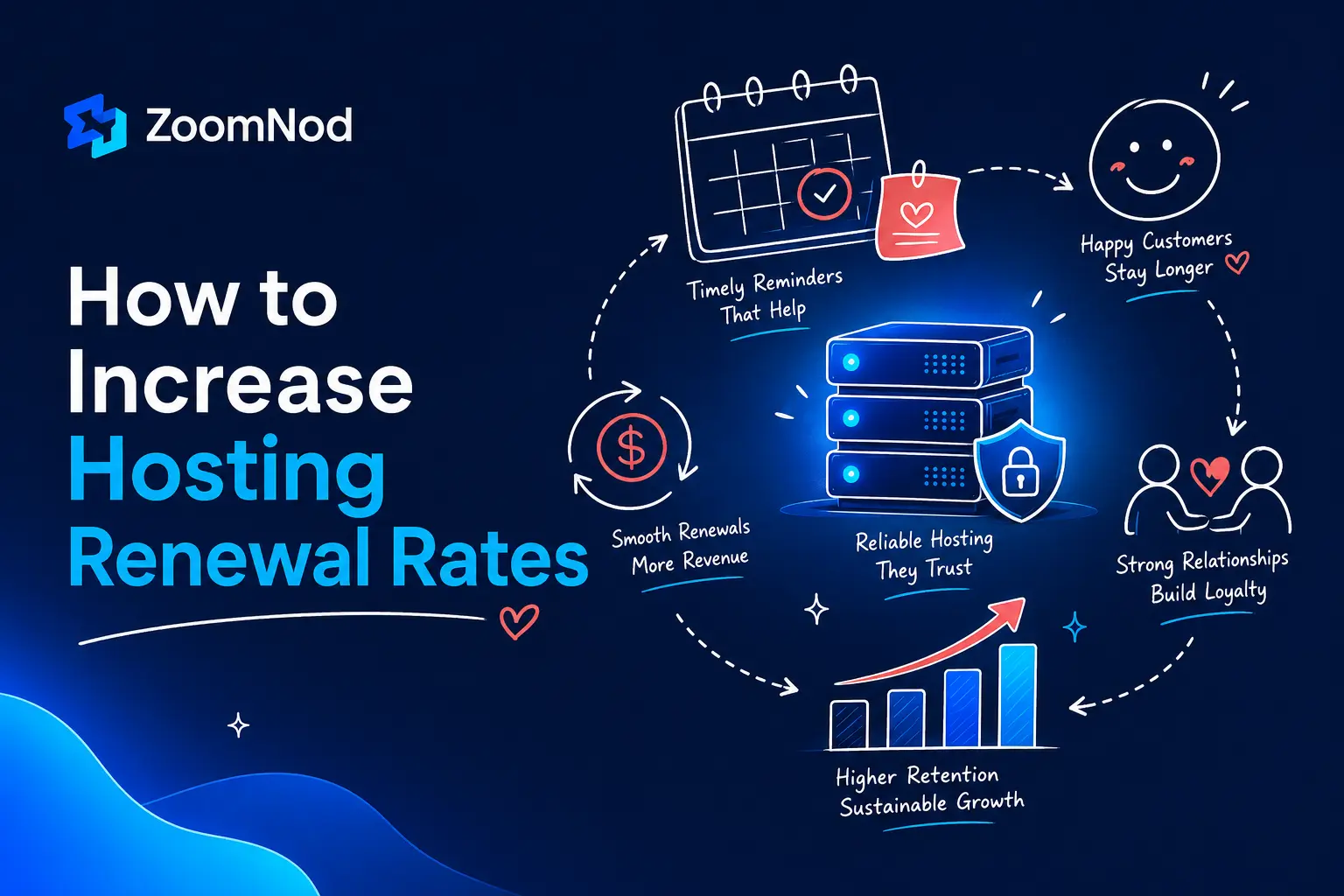
Increasing hosting renewal rates is one of the most direct ways to improve recurring revenue, customer lifetime value and the commercial return from customer acquisition.
A hosting company may successfully generate new customers through SEO, Google Ads, affiliates, social media and lead-generation campaigns. However, that growth becomes difficult to sustain when a large percentage of customers fail to renew after the first billing period.
Renewal performance is influenced by the entire customer journey.
Customers are more likely to renew when they purchased the right plan, completed onboarding successfully, understand how to use the service, received useful support, experienced clear billing communication and continued to perceive value from the product.
Customers may fail to renew because they actively choose to cancel. They may also be lost unintentionally because a payment card expired, a bank declined the transaction or a billing notification was overlooked.
A hosting renewal strategy must therefore address both customer value and payment recovery.
A renewal reminder sent shortly before the billing date cannot repair months of poor onboarding, unresolved support problems or unclear pricing. Strong renewal rates are created by coordinated work across marketing, product, billing, support and customer success.
Zoomnod provides specialist digital marketing and lifecycle growth services for hosting companies based on six years of hosting-industry experience and work with multiple hosting providers.
Our approach connects acquisition, customer onboarding, email marketing, conversion optimisation, retention and recurring-revenue measurement.
This article explains how shared hosting, VPS, cloud, WordPress hosting, dedicated server and managed infrastructure companies can build a structured renewal strategy.
What Is a Hosting Renewal Rate?
A hosting renewal rate measures the percentage of eligible customers or subscriptions that successfully continue into the next billing period.
The renewal may occur monthly, quarterly, annually or according to another contract term.
Hosting companies can calculate renewal rates using customer count, subscription count or recurring revenue.
Review these measurements separately because a company may retain many low-value accounts while losing a smaller number of commercially important dedicated server or managed cloud customers.
Customer renewal rate
Customers who renewed divided by customers eligible to renew, multiplied by 100
Subscription renewal rate
Subscriptions renewed divided by subscriptions eligible for renewal, multiplied by 100
Revenue renewal rate
Recurring revenue retained from the renewing customer group divided by recurring revenue available for renewal, multiplied by 100
Example
A hosting company has 1,000 annual subscriptions eligible for renewal. If 820 subscriptions renew successfully, the subscription renewal rate is 82%.
820 divided by 1,000, multiplied by 100, equals 82%.
Why Hosting Renewal Rates Matter
Hosting is a recurring-revenue business. The initial purchase may cover only a small part of the customer’s total commercial value.
When a customer renews, the company may continue generating revenue without repeating the full original acquisition process.
Higher renewal rates can increase customer lifetime value, make recurring revenue more predictable and improve acquisition payback.
Renewal performance also shows whether the company is attracting suitable customers.
A campaign that generates many discounted purchases but poor renewals may look successful when judged only by first-order revenue. It may be unprofitable when customer support, infrastructure costs, refunds and churn are included.
A campaign that generates fewer customers with strong renewal behavior may produce greater long-term value.
Hosting companies should connect acquisition reports with activation, renewal and lifetime revenue.
Renewal Rate Is a Lifecycle Metric
Renewal does not begin when a reminder email is sent.
The likelihood of renewal starts developing before the customer purchases and continues through setup, migration, product usage, support and billing.
To improve renewals, review the full customer lifecycle.
Acquisition
The customer should match the product and understand the pricing, support scope and technical requirements.
Purchase
The checkout should clearly explain the billing period, introductory terms and renewal price.
Onboarding
The customer should activate the service and reach a meaningful outcome quickly.
Adoption
The customer should use the features and resources that create ongoing value.
Support
Technical problems should be handled clearly and effectively.
Pre-renewal
The customer should receive transparent, useful and timely communication.
Payment
The payment process should reduce avoidable failures and make billing updates simple.
Post-renewal
The customer should receive confirmation and continue into the next value cycle.
Measure Renewal Rates by Customer Segment
A company-wide renewal percentage can hide important differences between products, markets and customer types.
Segment renewal reporting to identify where improvement is needed.
Recommended Segments
- Shared hosting
- Managed VPS
- Unmanaged VPS
- Linux VPS
- Windows VPS
- Cloud hosting
- Dedicated servers
- WordPress hosting
- Agency hosting
- Reseller hosting
- Monthly billing
- Annual billing
- Country
- Server location
- Currency
- Customer value
- Customer age
- Acquisition channel
- Marketing campaign
- Affiliate partner
- Introductory offer
- Payment method
- Managed or unmanaged service
For example, annual WordPress hosting customers acquired through organic search may renew differently from monthly VPS customers acquired through a discount campaign.
These differences should influence product positioning, campaign budgets and retention activity.
Separate Active Non-Renewal From Failed Payment Churn
A customer may fail to renew for two broad reasons.
The first is active non-renewal. The customer intentionally decides not to continue.
The second is involuntary non-renewal. The customer may still want the service, but the payment fails or the billing issue remains unresolved.
These situations require different responses.
Active Non-Renewal
- The customer no longer needs the service.
- The product does not match the customer’s requirements.
- The customer experienced technical problems.
- Support did not resolve an issue.
- The renewal price feels too high.
- A competitor offered a better fit.
- The customer’s project ended.
- The customer moved to another infrastructure model.
Involuntary Non-Renewal
- Expired card
- Insufficient funds
- Bank decline
- Outdated billing address
- Required payment authentication
- Changed payment method
- Missed invoice
- Billing-system error
Improve Customer Fit Before Purchase
Improving renewal rates starts with attracting customers whose needs match the service.
Poor customer fit can create early cancellations, refund requests and low renewal rates.
Marketing pages should make it clear who the product is designed for and what level of technical knowledge is required.
Managed and unmanaged hosting services should not be promoted with interchangeable language.
A customer expecting full server management may be disappointed after purchasing an unmanaged VPS. A technically experienced developer may not value the additional cost of a managed service.
Accurate targeting and positioning help customers choose correctly.
Recommended Actions
- Define the intended customer for each plan.
- Explain managed and unmanaged responsibilities.
- Show relevant resource limits.
- Describe server locations accurately.
- Explain included support.
- Clarify backup responsibilities.
- Use product-specific landing pages.
- Avoid attracting customers through unrelated broad keywords.
- Review renewal rates by acquisition channel.
- Reduce reliance on promotions that attract poor-fit customers.
Related Zoomnod services include digital marketing for hosting companies and lead generation for hosting companies.
Make Renewal Pricing Clear From the Beginning
Unexpected pricing is a common source of customer frustration.
Hosting companies often use introductory offers to attract new customers. These promotions can support acquisition, but customers should understand what they will pay when the initial term ends.
The renewal price should be visible before purchase, not introduced for the first time in a billing notification.
Transparent pricing may deter some unsuitable buyers, but it can improve customer quality and reduce future disputes.
The website, checkout, customer portal and renewal emails should use consistent pricing information.
Pricing Information to Show
- Introductory price
- Standard renewal price
- Billing period
- Contract length
- Included resources
- Taxes where applicable
- Control-panel fees
- Add-on charges
- Promotional expiration date
- Cancellation terms
- Refund terms
Learn more about conversion rate optimisation for hosting companies.
Build Product-Specific Onboarding
Customers are more likely to renew when they successfully activate and use the service.
Onboarding should not consist only of a generic welcome email.
Each hosting product requires a different path to first value.
Shared Hosting Onboarding
- Confirm account access.
- Connect or register a domain.
- Install WordPress or another website platform.
- Create email accounts.
- Introduce the control panel.
- Configure backups.
- Show available support channels.
VPS Onboarding
- Confirm server deployment.
- Provide secure access guidance.
- Explain operating-system details.
- Configure basic security.
- Explain backup options.
- Show resource monitoring.
- Clarify management responsibilities.
Managed Hosting Onboarding
- Confirm the management scope.
- Collect migration requirements.
- Introduce the support process.
- Explain monitoring and update responsibilities.
- Set communication expectations.
- Schedule an initial account review where appropriate.
Dedicated Server Onboarding
- Confirm hardware configuration.
- Provide deployment updates.
- Share access and network information securely.
- Explain management options.
- Confirm escalation contacts.
- Review backup and security services.
Learn more about email marketing for hosting companies.
Reduce Time to First Value
Time to first value is the period between purchase and the customer achieving a meaningful outcome.
For a shared hosting customer, this may be launching a website. For a VPS customer, it may be deploying an application. For a managed hosting customer, it may be completing a migration.
Inactive customers may not recognise the subscription’s value and may cancel before renewal.
Hosting companies should track whether new customers complete the steps required to receive value.
Recommended Improvements
- Use setup checklists.
- Display onboarding progress.
- Send event-based reminders.
- Offer migration assistance.
- Create product-specific tutorials.
- Detect inactive accounts.
- Trigger support outreach after incomplete setup.
- Simplify domain and DNS instructions.
- Remove unnecessary activation steps.
- Use customer language rather than internal technical terminology.
Track Product Adoption Before Renewal
A customer login does not necessarily indicate successful product adoption.
The company should identify the actions that show the customer is receiving meaningful value.
Shared Hosting
- Domain connected
- Website published
- Website receiving traffic
- Email accounts configured
- Backup enabled
VPS Hosting
- Server accessed
- Application deployed
- Security configured
- Backups enabled
- Resources actively used
WordPress Hosting
- Website migrated or installed
- Staging used
- Backups enabled
- Caching configured
- Security tools activated
Agency Hosting
- First client site added
- Team member invited
- Staging environment created
- Multiple websites managed
Managed Hosting
- Migration completed
- Monitoring activated
- Support relationship established
- Account review completed
Customers who have not completed important adoption actions should receive support and education before the renewal period.
Address the value gap before the customer decides not to renew.
Create a Pre-Renewal Health Check
A pre-renewal health check reviews the customer’s account before renewal communication begins.
This helps the company identify at-risk customers and problems that may affect renewal.
Health Check Fields
- Product usage
- Onboarding completion
- Open support issues
- Recent service incidents
- Payment-method status
- Customer feedback
- Account value
- Resource limits
- Upgrade or downgrade requests
- Previous failed payments
- Contract notice period
- Primary account contacts
Recommended Actions
- Escalate unresolved support issues.
- Offer help to inactive customers.
- Review whether the current plan remains suitable.
- Contact high-value accounts personally.
- Update missing billing information.
- Resolve migration or configuration problems.
- Document the renewal owner for B2B accounts.
Build a Renewal Communication Timeline
Renewal communication should give customers enough time to understand the upcoming charge, review the service and resolve billing problems.
The timing should reflect the billing period, customer type, account value and applicable requirements.
Annual and high-value contracts may require earlier communication than monthly self-service plans.
60 to 90 days before renewal
Recommended for: High-value B2B, managed hosting and dedicated infrastructure accounts
Begin an account review, confirm stakeholders and discuss upcoming requirements.
30 days before renewal
Recommended for: Annual hosting subscriptions and contracts
Provide renewal date, amount, billing period, service summary and account-management options.
14 days before renewal
Recommended for: Annual or higher-value accounts
Remind the customer, highlight unresolved actions and provide a direct support option.
7 days before renewal
Recommended for: Most annual subscriptions
Send a concise reminder with payment and account-management links.
1 to 3 days before renewal
Recommended for: Selected customer segments
Confirm the upcoming billing event without creating unnecessary pressure.
Renewal day
Recommended for: All renewing accounts
Process the payment and send a clear result notification.
After successful renewal
Recommended for: All renewed accounts
Confirm payment, invoice details and continued service.
After failed renewal
Recommended for: Accounts with unsuccessful payment
Begin the payment-recovery workflow.
What a Hosting Renewal Email Should Include
Renewal emails should be useful, transparent and easy to act on.
The message should not hide the amount or require the customer to search for essential billing information.
Required Elements
- Customer or company name
- Service being renewed
- Renewal date
- Renewal amount
- Billing period
- Payment method where appropriate
- Direct billing-update link
- Account-management link
- Support contact
- Cancellation or plan-change information
- Invoice information where relevant
Recommended Subject Lines
- Your hosting plan renews on [date]
- Upcoming renewal for your [service name]
- Review your hosting renewal details
- Your annual hosting renewal is approaching
- Action needed: update your payment method
- Payment unsuccessful for your hosting service
Critical renewal emails should not be overloaded with unrelated promotions.
The customer’s main task should remain clear.
Personalize Renewal Messages by Product and Customer Type
A generic renewal email may contain the correct details but still fail to persuade the customer.
The message should reflect the product, billing cycle, customer value and lifecycle stage.
Shared hosting customer
- Website continuity
- Domain and email services
- Renewal date and price
- Simple account-management options
VPS customer
- Active server resources
- Backups
- Usage
- Security
- Upgrade or plan-review options
Agency customer
- Client websites hosted
- Team access
- Staging
- Migration support
- Account review
Dedicated server customer
- Hardware and service summary
- Contract date
- Resource planning
- Support contacts
- Infrastructure review
Managed hosting customer
- Management scope
- Support relationship
- Monitoring
- Migration history
- Upcoming infrastructure needs
Reinforce Value Before Asking for Renewal
Customers should understand what they are renewing.
A value recap can help customers recognise how the service supports their website, application or business.
The recap should use accurate account data and avoid unsupported claims.
Value Signals
- Websites hosted
- Servers active
- Backups completed
- Support cases resolved
- Migration completed
- Monitoring enabled
- Security features active
- Team members using the account
- Resources used
- Additional services included
A value recap should not replace pricing transparency.
The renewal amount, date and terms should remain easy to understand.
Improve Payment Method Management
Customers should be able to review and update payment details without unnecessary steps.
A difficult billing portal can turn a simple expired-card issue into involuntary churn.
Recommended Improvements
- Provide a direct payment-update link.
- Display current billing status clearly.
- Notify customers when a payment method is approaching expiration where supported.
- Support relevant payment methods for priority markets.
- Confirm successful billing updates.
- Keep account and billing contacts current.
- Use secure authentication.
- Avoid asking customers to contact several departments for a routine update.
- Ensure the billing experience works on mobile devices.
Create a Failed Payment Recovery Workflow
A failed renewal payment does not always indicate that the customer wants to leave.
A structured recovery workflow can prevent avoidable service loss while maintaining a clear and respectful customer experience.
- Detect the Failure: Record the payment failure, affected service, amount, payment method and available failure information.
- Notify the Customer: Send a clear message explaining that the payment was unsuccessful and provide a direct method for updating billing details.
- Use Appropriate Payment Retries: Use the configured billing-system retry process while avoiding unnecessary duplicate attempts.
- Provide In-Account Notification: Show the billing issue in the customer portal where appropriate.
- Escalate Valuable Accounts: Assign personal outreach for higher-value managed hosting, cloud or dedicated server customers.
- Explain Service Impact: Communicate the timeline and consequences accurately before suspension or cancellation.
- Stop Recovery Messages After Payment: Remove the customer from the recovery sequence immediately after successful payment.
- Record the Outcome: Measure whether the payment was recovered and identify repeated failure patterns.
Segment Payment Recovery by Account Value
The same dunning process may not be appropriate for every customer.
A low-value monthly shared hosting account may use a largely automated workflow.
A high-value dedicated server or managed cloud account may justify personal contact, coordination with finance and a longer resolution process.
Low-value self-service account
- Automated email
- In-account notification
- Configured retries
- Clear final notice
Mid-value VPS or agency account
- Automated sequence
- Support option
- Account review when repeated failures occur
- Plan or billing adjustment where relevant
High-value B2B account
- Named account owner
- Direct finance contact
- Invoice and contract review
- Personal renewal follow-up
- Documented escalation
Offer Plan Reviews Before Renewal
Some customers fail to renew because the current plan no longer matches their needs.
A plan review can identify whether the customer needs a lower-cost option, more resources, a different billing cycle or a managed service.
The recommendation should solve a genuine customer problem rather than create unnecessary complexity.
Possible Plan Changes
- Move to a smaller plan
- Move to a larger plan
- Change from monthly to annual billing
- Change from annual to monthly billing
- Switch from unmanaged to managed VPS
- Remove unused add-ons
- Add required backup or security services
- Change server location
- Consolidate several services
- Move from shared hosting to VPS
Use Upgrades Carefully in Renewal Campaigns
Renewal is also a useful point to check whether the customer has outgrown the current service.
However, upgrade recommendations should be based on usage, technical needs or business growth.
A customer with unresolved support problems should not receive an upgrade promotion as the first response.
The company should first address the problem and confirm whether an upgrade is genuinely appropriate.
Upgrade Signals
- Repeated resource-limit events
- Sustained traffic growth
- Additional websites
- Increased storage use
- Higher support requirements
- Need for managed administration
- Need for stronger isolation
- Need for additional server locations
Improve Hosting Support Before Renewal
Customers may decide not to renew after repeated support frustration, even when the underlying hosting product remains suitable.
Before renewal, the company should identify accounts with unresolved or recurring technical issues.
Support Actions
- Review recent support history.
- Escalate unresolved problems.
- Avoid forcing customers to repeat information.
- Confirm ownership of important cases.
- Provide realistic resolution expectations.
- Follow up after major incidents.
- Document the outcome.
- Convert common support problems into educational resources.
- Invite high-value customers to an account review.
Build a B2B Hosting Renewal Process
B2B hosting renewals may involve technical, commercial and procurement stakeholders.
The process should begin before the contract deadline and assign clear ownership.
B2B Renewal Process
- Record the renewal date and notice period.
- Assign a renewal owner.
- Confirm decision-makers and billing contacts.
- Review account usage and support history.
- Discuss future capacity requirements.
- Identify technical or commercial concerns.
- Prepare pricing and contract information.
- Coordinate procurement documentation.
- Confirm the renewal decision.
- Record the final commercial outcome.
Stakeholders
- Founder
- Chief technology officer
- IT director
- Infrastructure manager
- Finance team
- Procurement
- Account manager
Learn more about LinkedIn Ads for hosting companies.
Use Lifecycle Email Marketing to Support Renewals
Renewal communication should be part of a wider lifecycle email programme.
Customers should receive useful messages throughout the relationship, not only when payment is due.
Lifecycle Email Workflows
- Welcome sequence
- Onboarding sequence
- Incomplete setup reminders
- Product education
- Migration updates
- Feature adoption
- Customer health check
- Pre-renewal reminders
- Payment recovery
- Successful renewal confirmation
- Cancellation follow-up
- Win-back campaign
Learn more about email marketing for hosting companies.
Create Educational Content That Supports Renewal
Educational content helps customers use the product and understand its ongoing value.
Common support issues, onboarding challenges and product features can become retention content.
Educational Content Topics
- How to connect a domain
- How to configure DNS
- How to migrate a website
- How to secure a VPS
- How to configure server backups
- How to monitor hosting resources
- How to use a control panel
- How to prepare for traffic growth
- When to upgrade a hosting plan
- How managed hosting responsibilities work
- How to reduce website downtime risk
- How to manage multiple client websites
Learn more about content marketing for hosting companies.
Use Customer Feedback Before Renewal
Hosting companies should not wait for cancellation to ask whether the customer is satisfied.
A pre-renewal feedback request can identify problems while there is still time to act.
Feedback Questions
- Has the service met your requirements?
- Have you experienced any unresolved technical issues?
- Is the current plan still suitable?
- Do you need additional resources or support?
- Was the onboarding process clear?
- What could improve your experience?
- Would you like an account review before renewal?
Feedback should lead to action.
Repeated concerns should be shared with product, support, billing or marketing teams.
Create a Non-Renewal Save Workflow
When a customer indicates that they do not plan to renew, the company should identify the reason and determine whether a suitable solution exists.
The objective is not to block cancellation. It is to resolve preventable problems and present legitimate alternatives.
Price
- Review whether the plan is too large.
- Present a suitable lower-cost option.
- Explain monthly or annual billing choices.
- Avoid automatic discounting without understanding the issue.
Technical problem
- Escalate the unresolved issue.
- Offer a technical account review.
- Confirm whether the product is appropriate.
Poor support experience
- Review the support history.
- Assign ownership.
- Explain the resolution plan.
- Follow up personally where appropriate.
Migration problem
- Offer migration assistance.
- Provide a clear checklist.
- Assign a specialist for suitable accounts.
Product no longer needed
- Confirm non-renewal clearly.
- Provide export or migration instructions.
- Ask for permission to maintain relevant future communication.
Competitor selected
- Ask what influenced the decision.
- Record missing features or pricing concerns.
- Avoid making unsupported competitor claims.
Use Win-Back Campaigns After Non-Renewal
Some former customers may become suitable prospects again after a service improvement, new server location or change in their requirements.
Win-back campaigns should be segmented by original product, cancellation reason, previous value and time since non-renewal.
Relevant Win Back Reasons
- Relevant product improvement
- New managed service
- New server location
- Improved migration support
- Plan better matched to the customer
- Updated feature
- Resolved previous issue
- Return consultation
A generic discount should not be the only win-back message.
When the customer left because of a specific problem, the campaign should explain what has meaningfully changed.
Connect Renewal Data With Acquisition Channels
Evaluate marketing performance beyond the first transaction.
Hosting companies should compare renewal rates across channels, campaigns, keywords, affiliates and promotions.
One channel may generate inexpensive purchases but weak renewals. Another may create fewer customers who retain longer and purchase additional services.
Budget decisions should consider lifetime commercial value.
Channels to Compare
- Organic search
- Google Ads
- LinkedIn Ads
- Affiliate marketing
- Content campaigns
- Email campaigns
- Social media
- Referral partners
- Direct sales
Related Zoomnod services include SEO for hosting companies, Google Ads for hosting companies, affiliate marketing for hosting companies and social media marketing for hosting companies.
Test Renewal Improvements
Where practical, test renewal changes under controlled conditions.
The company should define a baseline, change one meaningful element and review customer and revenue outcomes.
Renewal Test Ideas
- Reminder timing
- Email subject line
- Billing-update CTA
- Account review offer
- Value recap format
- Product-specific renewal message
- Payment-recovery sequence
- In-account billing notification
- Plan-review placement
- Support escalation timing
Testing should avoid creating inconsistent billing information or reducing clarity.
Renewal transparency and customer rights should not be treated as optional conversion variables.
Hosting Renewal Metrics to Track
- Customer renewal rate: Measures the percentage of eligible customers who continue.
- Subscription renewal rate: Measures successful renewal of eligible subscriptions.
- Revenue renewal rate: Measures the recurring revenue retained from the renewal group.
- Failed payment rate: Shows how often renewal attempts are unsuccessful.
- Payment recovery rate: Measures how many failed payments are later recovered.
- Voluntary non-renewal rate: Measures intentional customer decisions not to continue.
- Involuntary churn rate: Measures customers lost through unresolved billing failures.
- Activation rate: Shows how many customers complete meaningful setup steps.
- Customer lifetime value: Connects renewal performance with total customer value.
- Renewal rate by channel: Shows which acquisition sources produce stronger retention.
- Upgrade and downgrade rate: Shows how account value changes around renewal.
- Net revenue retention: Measures retained recurring revenue after cancellations, downgrades and expansion.
Common Hosting Renewal Mistakes
Sending the First Renewal Message Too Late
Customers may need time to review billing, contact stakeholders or update payment details.
Hiding the Renewal Amount
Clear pricing supports trust and reduces billing surprises.
Treating Every Customer the Same
Segment renewal journeys by product, billing cycle, value and risk.
Ignoring Failed Payments
A failed charge may represent recoverable revenue rather than an intentional cancellation.
Promoting Upgrades Before Solving Problems
Resolve support and adoption issues before recommending additional spending.
Measuring Only Successful Payments
Track payment failures, recovery, active non-renewal and customer value separately.
Waiting Until Renewal to Demonstrate Value
Product value should be reinforced throughout onboarding and adoption.
Using Generic Renewal Emails
Messages should reflect the product, account and customer journey.
Making Account Management Difficult
Customers should be able to update billing and review services without unnecessary friction.
Ignoring Renewal Performance by Acquisition Source
Use renewal and lifetime-value data when deciding where to invest marketing budgets.
A Step-by-Step Hosting Renewal Strategy
- Establish a Renewal Baseline: Measure customer, subscription and revenue renewal rates.
- Segment Renewal Performance: Compare products, markets, billing periods, channels and customer values.
- Separate Active and Involuntary Non-Renewal: Create different responses for customer decisions and payment failures.
- Improve Customer Fit: Use accurate targeting, positioning and pricing information.
- Strengthen Onboarding: Help customers reach product value quickly.
- Track Adoption: Identify customers who have not completed meaningful product actions.
- Run Pre-Renewal Health Checks: Resolve support, billing and product-fit concerns early.
- Build a Renewal Communication Timeline: Use transparent reminders appropriate to the billing period and customer type.
- Implement Payment Recovery: Use notifications, billing links, retries and account escalation.
- Review Commercial Outcomes: Measure renewal, customer lifetime value, revenue retention and performance by acquisition channel.
How Zoomnod Helps Hosting Companies Increase Renewal Rates
Zoomnod treats renewal improvement as a customer-lifecycle project.
We review how customers are acquired, what the website promises, how billing is explained, what happens after purchase and which problems appear before renewal.
Our six years of hosting-industry experience helps us understand the differences between shared hosting, VPS, WordPress hosting, cloud, dedicated servers, managed hosting, agency hosting and reseller services.
Zoomnod Services
- Renewal journey audit
- Customer segmentation
- Acquisition-channel analysis
- Pricing and landing-page review
- Onboarding assessment
- Product adoption planning
- Renewal email strategy
- Payment-recovery planning
- Customer-risk workflows
- B2B renewal process design
- Non-renewal survey planning
- Win-back strategy
- Retention and revenue reporting
Related Zoomnod services include digital marketing for hosting companies, email marketing for hosting companies, conversion rate optimisation for hosting companies and content marketing for hosting companies.
Build a Stronger Hosting Renewal Strategy
Zoomnod can review your customer journey, billing communication, renewal campaigns, payment recovery and retention data before creating a targeted improvement plan.
Book a Free Consultation
Increase Renewals by Creating Value Throughout the Customer Journey
Hosting renewal rates cannot be improved through reminder emails alone.
Customers renew when the service continues to solve a problem, the product matches their needs, the billing terms are clear and technical issues are resolved.
The renewal process should begin with accurate customer acquisition and transparent pricing.
It should continue through product-specific onboarding, faster time to value, customer education, reliable support and early risk detection.
Pre-renewal communication should clearly explain the service, renewal date, amount and account-management options.
Failed payment workflows should distinguish customers who intend to leave from customers who simply need to update billing details.
B2B accounts may require earlier planning, stakeholder coordination and personal account reviews.
An effective hosting renewal strategy connects marketing, billing, product, support and customer success around recurring customer value.
Zoomnod can help hosting and infrastructure providers create this connected renewal system.
Book a free consultation with Zoomnod to discuss your hosting renewal rates, lifecycle communication and customer-retention opportunities.
Book a Free Consultation
Frequently Asked Questions
What is a hosting renewal rate?
A hosting renewal rate is the percentage of eligible customers or subscriptions that successfully continue into the next billing period.
How can a hosting company increase renewal rates?
A hosting company can increase renewals through accurate customer targeting, transparent pricing, better onboarding, product adoption, proactive support, renewal reminders and payment recovery.
How do you calculate a hosting renewal rate?
Divide the number of customers or subscriptions that renewed by the number eligible to renew, then multiply the result by 100.
Why do hosting customers fail to renew?
Customers may fail to renew because of product mismatch, poor onboarding, technical problems, weak support, unexpected pricing, changed needs or failed payments.
When should a hosting company send renewal reminders?
Timing depends on the billing period and customer type. Annual and high-value accounts may require reminders and account reviews several weeks before renewal.
What should a hosting renewal email include?
It should include the service, renewal date, amount, billing period, account-management link, payment-update option and support contact.
Can onboarding improve hosting renewal rates?
Yes. Onboarding helps customers activate the service, complete migrations, configure products and receive value before the renewal period.
How can hosting companies reduce failed renewal payments?
Hosting companies can use clear payment notifications, billing-update links, appropriate retries, in-account alerts and personal outreach for high-value accounts.
What is involuntary non-renewal?
Involuntary non-renewal occurs when a customer loses the subscription because of a failed or unresolved payment rather than an intentional decision to cancel.
Should hosting companies offer discounts before renewal?
Discounts may be appropriate in selected cases, but they should not replace solving product, support, billing or customer-fit problems.
How can B2B hosting companies improve contract renewals?
B2B providers can assign renewal ownership, confirm stakeholders, review account health, discuss future requirements and begin communication before the notice deadline.
Should hosting companies recommend upgrades during renewal?
Upgrade recommendations should be based on real usage or customer needs and should not be used instead of resolving support or product problems.
How should hosting renewal performance be measured?
Track customer renewal rate, subscription renewal rate, revenue renewal rate, failed payments, payment recovery, customer lifetime value and renewal performance by channel.
Can Zoomnod help improve hosting renewal rates?
Yes. Zoomnod can review customer acquisition, onboarding, pricing, lifecycle email, renewal communication, payment recovery and retention reporting.
How do we get started?
Book a free consultation with Zoomnod to discuss your hosting products, renewal process and customer-retention goals.
Which actions usually have the greatest impact on hosting renewal rates: better onboarding, proactive support, product adoption, renewal communication, or annual billing incentives?
Renewal problems often begin earlier than the renewal date. Service instability, unclear value, billing surprises, and unresolved support issues can reduce trust long before the reminder sequence starts.
Hosting renewal rate should be segmented by product, billing cycle, tenure, acquisition source, and customer type. That helps separate a communication problem from a product-fit or service-quality problem.
Increasing hosting renewal rates seems to depend on the customer experience throughout the subscription, not only the renewal reminder. I would review whether the customer completed onboarding, achieved stable website or server performance, received useful support, enabled backups, and understands the upcoming renewal price. The renewal journey should probably differ for monthly shared hosting, annual VPS plans, reseller accounts, and dedicated servers. It would also help to explain the right timing for value summaries, renewal notices, payment-method updates, plan reviews, and proactive outreach to high-value or at-risk accounts.
Renewal rate can improve when expired cards, bank declines, and outdated billing contacts are handled through payment retries and clear dunning emails. Some lost renewals are billing failures rather than intentional churn.
Hosting renewal rates should be tracked by product, signup cohort, acquisition channel, discount type, and customer tenure. A blended renewal percentage can hide serious problems in one segment.