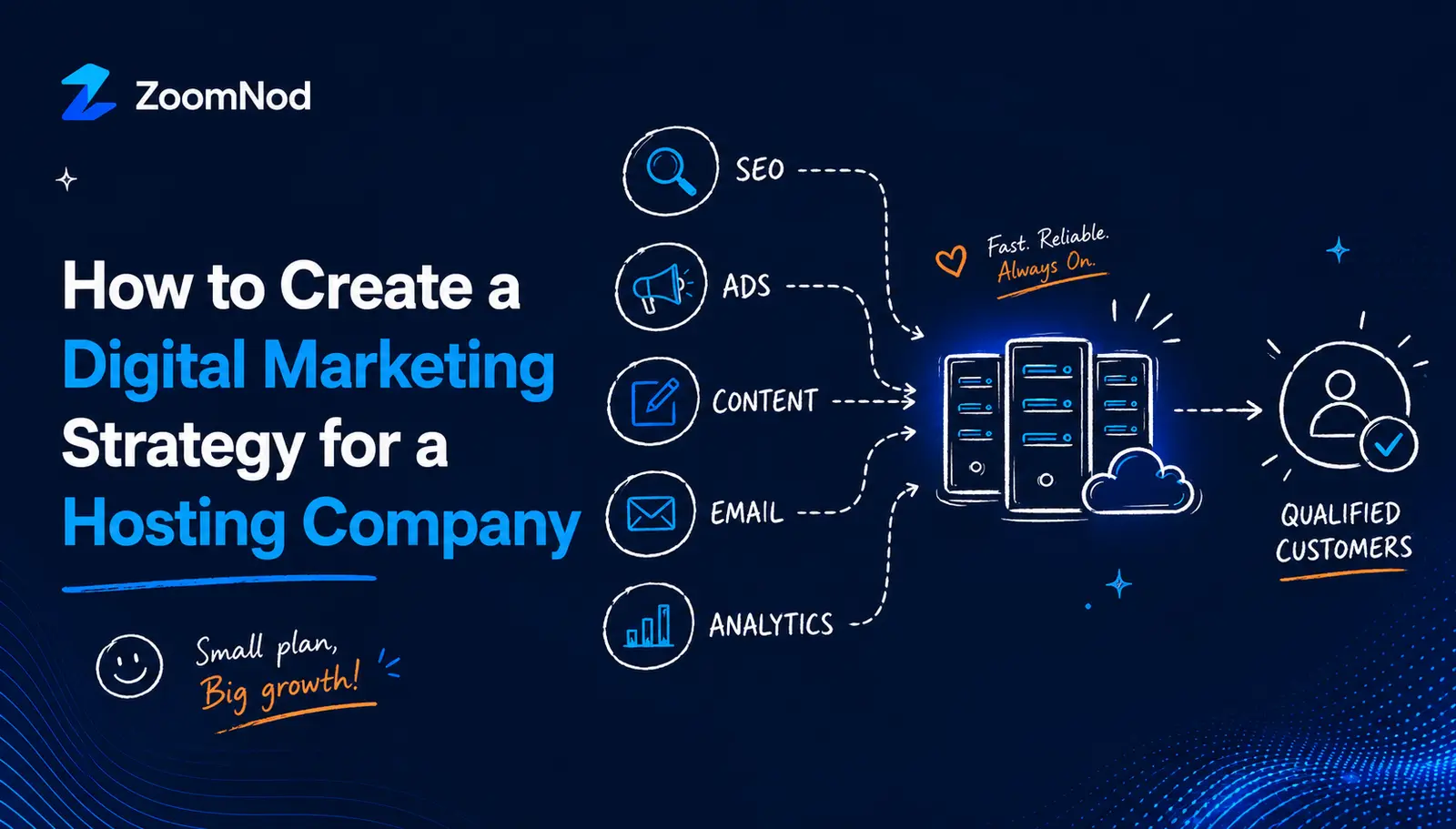
A digital marketing strategy for a hosting company is a structured plan for reaching suitable customers, converting demand into sales and building recurring revenue across the customer lifecycle.
It should define which hosting products the company will prioritise, which customer segments it wants to attract, which countries and server locations it will target, which marketing channels it will use and how each campaign will generate purchases or qualified leads.
Hosting companies often treat digital marketing as a collection of disconnected activities.
They may run Google Ads without dedicated landing pages, publish blog posts without a keyword strategy, recruit affiliates without an activation plan or send promotional emails without lifecycle segmentation.
An effective strategy connects SEO, paid advertising, content, social media, affiliates, email, lead generation and conversion optimisation around shared business goals.
Zoomnod provides specialist digital marketing services for hosting companies based on six years of hosting-industry experience and work with multiple hosting providers.
What Is a Digital Marketing Strategy for a Hosting Company?
A hosting digital marketing strategy is a plan that connects business objectives with online channels, customer journeys, content, offers and measurement.
The goal extends beyond generating more website traffic.
A useful strategy should help the company attract suitable customers, promote priority products, improve conversion rates, support renewals and build a repeatable growth system.
- Market research
- Competitor analysis
- Product positioning
- Ideal customer profiles
- Search engine optimisation
- Google Ads
- LinkedIn Ads
- Content marketing
- Affiliate marketing
- Email marketing
- Social media
- Lead generation
- Marketing automation
- Conversion rate optimisation
- Customer retention
- Revenue attribution
Why Hosting Companies Need a Specialist Marketing Strategy
Hosting Products Are Technical
Customers may compare CPU, RAM, storage, bandwidth, operating systems, server locations, control panels, management levels, security, backups and migration support.
Marketing must explain these features without overwhelming less-technical buyers.
Hosting Is a Recurring-Revenue Business
The commercial relationship continues after the first purchase.
A marketing strategy should account for retention, renewals, upgrades, referrals and churn as well as acquisition.
Customer Values Vary Significantly
A low-cost shared hosting customer and an enterprise cloud contract do not have the same commercial value.
Marketing investment should reflect product margin, billing period, customer lifetime, support costs, upgrade potential and churn risk.
The Market Is Highly Competitive
Hosting companies compete with global brands, regional providers, low-cost providers, cloud platforms, resellers and specialist managed-service providers.
Generic claims such as fast hosting or reliable servers rarely create meaningful differentiation.
Step 1: Define Your Business Goals
Begin with commercial objectives rather than marketing channels.
Each goal should connect with a measurable customer or revenue outcome.
- Increase shared hosting purchases
- Generate more VPS customers
- Promote a new server location
- Attract managed hosting leads
- Grow annual subscriptions
- Generate dedicated server quotations
- Recruit agency partners
- Expand into a new country
- Increase customer renewals
- Reduce checkout abandonment
- Improve customer lifetime value
Step 2: Review the Economics of Each Hosting Product
Before choosing channels, understand the economics behind your services.
A product with a higher customer lifetime value may support more expensive acquisition channels.
A lower-value product may require efficient self-service conversion, automation and lower customer acquisition costs.
- Initial purchase price
- Renewal price
- Monthly recurring revenue
- Annual contract value
- Gross margin
- Infrastructure cost
- Support cost
- Payment fees
- Refund rate
- Average customer lifetime
- Upgrade rate
- Cross-sell potential
- Customer churn
- Sales involvement
Step 3: Select Priority Products
Trying to promote every hosting service at once can stretch budgets, content resources and sales attention too far.
Choose priority products according to demand, margin, customer value, infrastructure availability and strategic importance.
- Managed VPS
- Windows VPS
- Linux VPS
- Dedicated servers
- Cloud hosting
- WordPress hosting
- Agency hosting
- Reseller hosting
- Website migration
- Managed infrastructure
Step 4: Define Your Ideal Customers
B2C Hosting Customer Profile
- Small-business owners
- Freelancers
- Bloggers
- Students
- Developers
- Online sellers
- Content creators
- New website owners
B2B Hosting Customer Profile
- SaaS companies
- Digital agencies
- Software businesses
- E-commerce companies
- Managed service providers
- Technology startups
- Enterprise organisations
- IT departments
Step 5: Understand the Buying Committee
Founder or Business Owner
- Cost
- Business continuity
- Growth
- Support
- Supplier reliability
Chief Technology Officer
- Architecture
- Security
- Scalability
- Performance
- Technical compatibility
DevOps or Infrastructure Team
- Deployment
- APIs
- Root access
- Monitoring
- Operating systems
- Automation
Finance or Procurement
- Pricing
- Contract terms
- Billing
- Total cost
- Renewal conditions
Step 6: Research the Market and Competitors
Competitor research can reveal opportunities without dictating what to copy.
Use the findings to sharpen product positioning, improve landing pages and simplify customer journeys.
- Product positioning
- Pricing
- Introductory offers
- Renewal terms
- Server locations
- Technical features
- Search rankings
- Paid advertisements
- Affiliate programmes
- Content
- Landing pages
- Customer reviews
- Calls to action
- Lead offers
Step 7: Develop a Clear Value Proposition
A value proposition gives suitable customers a reason to choose your hosting company.
It should clarify who the product is for, which problem it solves, what is included, how migration is handled and what support is available.
Managed VPS
Managed VPS hosting for growing businesses that need dedicated resources without managing server updates, monitoring and security internally.
Agency Hosting
Centralised hosting for agencies that manage multiple client websites and need migration support, staging, team access and responsive technical assistance.
Step 8: Map the Customer Journey
Awareness
- Search
- Social media
- Videos
- Industry content
- Communities
- Partner recommendations
Consideration
- Comparison pages
- Technical guides
- Pricing pages
- Case studies
- FAQs
- Migration resources
- Product demonstrations
Decision
- Purchase
- Start a trial
- Book a consultation
- Request a quote
- Create an account
Onboarding
- Account activation
- DNS configuration
- Website migration
- Control-panel setup
- Security configuration
- Backup setup
Retention
- Product education
- Renewal reminders
- Support
- Usage advice
- Account reviews
Expansion
- Plan upgrades
- Additional servers
- Managed support
- Security services
- Backup products
- Annual billing
- Referrals
Step 9: Choose the Right Marketing Channels
SEO for Hosting Companies
SEO helps hosting providers capture long-term demand from customers searching for products, locations, features, comparisons and solutions. Learn more about SEO for hosting companies.
Google Ads for Hosting Companies
Google Ads can capture customers who are actively searching for hosting, VPS, cloud, dedicated server and migration services. Learn more about Google Ads for hosting companies.
LinkedIn Ads for B2B Hosting
LinkedIn may be suitable for reaching founders, CTOs, IT directors, DevOps managers, digital agencies and enterprise accounts. Learn more about LinkedIn Ads for hosting companies.
Lead Generation for Hosting Companies
Lead generation is suitable for managed infrastructure, dedicated servers, enterprise cloud, colocation and complex migration services. Learn more about lead generation for hosting companies.
Content Marketing for Hosting Companies
Content helps customers understand technical products, compare solutions and reduce purchase uncertainty. Learn more about content marketing for hosting companies.
Affiliate Marketing for Hosting Companies
Affiliate marketing helps hosting providers reach customers through established publishers, creators, developers and agencies. Learn more about affiliate marketing for hosting companies.
Email Marketing for Hosting Companies
Email supports lead nurturing, trial conversion, onboarding, renewals, upgrades and win-back campaigns. Learn more about email marketing for hosting companies.
Social Media Marketing for Hosting Companies
Social media can build awareness, technical authority, community relationships and customer trust. Learn more about social media marketing for hosting companies.
Conversion Rate Optimisation
CRO improves hosting product pages, pricing pages, landing pages, forms, trials and checkout journeys. Learn more about conversion rate optimisation for hosting companies.
Step 10: Build a Content Architecture
Commercial Content
- Hosting service pages
- VPS pages
- Dedicated server pages
- Cloud pages
- Location pages
- Industry pages
- Comparison pages
- Alternative pages
Educational Content
- Hosting tutorials
- Migration guides
- Security guides
- Performance articles
- Product comparisons
- Buyer checklists
Trust Content
- Case studies
- Customer stories
- Company expertise
- Support information
- Infrastructure details
- Data-centre information
Conversion Content
- Pricing pages
- Consultation pages
- Trial pages
- Migration assessment pages
- Quote forms
Step 11: Build Dedicated Landing Pages
Sending every visitor to the homepage can hurt campaign performance.
A landing page should align with the keyword, advertisement, audience, product, location, offer and CTA.
- Clear headline
- Target customer
- Product benefits
- Technical specifications
- Pricing
- Server locations
- Management details
- Migration support
- Trust signals
- FAQs
- Clear CTA
Step 12: Create Offers for Different Funnel Stages
Awareness
- Educational guide
- Hosting checklist
- Industry report
- Video
- Webinar
Consideration
- Hosting comparison
- Migration guide
- Cost calculator
- Product demonstration
- Case study
Decision
- Purchase a plan
- Start a trial
- Book a consultation
- Request a quotation
- Request a migration assessment
Step 13: Build Marketing Automation
Useful Triggers
- Guide download
- Product-page visit
- Trial registration
- Checkout abandonment
- Consultation request
- Purchase
- Renewal date
- Failed payment
- Product inactivity
- Cancellation
Possible Actions
- Send an email
- Update a CRM record
- Assign a salesperson
- Add a customer to a segment
- Trigger a support task
- Update an advertising audience
- Start an onboarding sequence
Step 14: Connect Marketing and Sales
- Ideal customers
- Priority industries
- Qualified lead definitions
- Lead ownership
- Follow-up times
- CRM stages
- Opportunity criteria
- Lost-deal reasons
- Revenue reporting
Step 15: Build Customer Onboarding Into the Strategy
- Account activation
- Control-panel access
- Domain connection
- DNS configuration
- WordPress installation
- Server deployment
- Website migration
- Security setup
- Backup configuration
- Monitoring
- Support access
Step 16: Create a Retention Strategy
- Educational email
- Product adoption
- Renewal reminders
- Failed-payment recovery
- Account reviews
- Support outreach
- Upgrade recommendations
- Win-back campaigns
Step 17: Set a Realistic Marketing Budget
Budget Factors
- Revenue goals
- Customer lifetime value
- Product margin
- Acquisition cost
- Payback period
- Market competition
- Sales capacity
- Organic visibility
- Current conversion rates
- Available internal resources
Budget Categories
- Paid advertising
- Content creation
- SEO
- Affiliate commissions
- Marketing software
- Creative production
- Landing-page development
- Email platforms
- Analytics
- Sales support
- Testing
Step 18: Define Marketing Metrics
Awareness Metrics
- Reach
- Impressions
- Brand searches
- Video views
- Direct traffic
Acquisition Metrics
- Website visits
- Cost per click
- Trial registrations
- Purchases
- Leads
- Customer acquisition cost
Lead Quality Metrics
- Qualified lead rate
- Sales acceptance rate
- Opportunity rate
- Proposal rate
- Win rate
Revenue Metrics
- Monthly recurring revenue
- Annual contract value
- Average order value
- Gross margin
- Revenue by channel
- Payback period
Retention Metrics
- Activation rate
- Renewal rate
- Churn
- Upgrade rate
- Customer lifetime value
- Win-back rate
How Zoomnod Creates Digital Marketing Strategies for Hosting Companies
Zoomnod builds each plan around the hosting provider rather than using a generic template.
We begin by reviewing hosting products, pricing, margins, customer segments, target countries, server locations, existing channels, customer lifetime value, churn and growth objectives.
Zoomnod combines six years of hosting-industry experience with specialist services across SEO, paid advertising, content, lead generation, affiliates, email, social media and conversion optimisation.
- Business and product discovery
- Market and competitor research
- Ideal customer development
- Customer journey mapping
- Channel prioritisation
- Offer development
- Content and landing-page planning
- Measurement design
- Campaign execution
- Revenue-focused optimisation
Explore our digital marketing for hosting companies service.
Build a Marketing System That Supports Recurring Growth
A digital marketing strategy for a hosting company should connect product priorities, customer needs, market opportunities, channels, landing pages, conversion tracking, onboarding, retention and revenue measurement.
An effective strategy combines SEO, paid advertising, content, affiliates, email, social media and CRO around measurable commercial outcomes.
Zoomnod helps hosting, VPS, cloud and infrastructure providers create marketing strategies grounded in their products, customers and recurring-revenue models.
Book a free consultation with Zoomnod to discuss your products, target markets, current campaigns and growth goals.
Frequently Asked Questions
What is a digital marketing strategy for a hosting company?
A digital marketing strategy for a hosting company is a structured plan for attracting, converting, onboarding and retaining customers through channels such as SEO, paid advertising, content, affiliates, email and social media.
How do you market a hosting company?
Begin by defining priority products, ideal customers, target markets, product economics and buyer journeys. Then choose suitable channels and build relevant landing pages, offers and measurement.
Which marketing channels work best for hosting companies?
Common channels include SEO, Google Ads, LinkedIn, content marketing, affiliate marketing, email, social media, lead generation and conversion optimisation.
What is the best strategy for a new hosting company?
A new hosting company should focus on a specific product or niche, validate demand through targeted campaigns and build long-term visibility through SEO and content.
How can a VPS company create a marketing strategy?
A VPS company can combine product-based and location-based SEO, Google Ads, technical content, affiliates, YouTube, email automation and conversion optimisation.
How do B2B hosting companies generate demand?
B2B hosting companies can use SEO, LinkedIn, Google Ads, thought leadership, webinars, content, account-based marketing and email nurturing.
Should hosting companies use SEO and Google Ads together?
Yes. Google Ads can capture immediate demand while SEO builds long-term organic visibility and content assets.
How much should a hosting company spend on marketing?
The appropriate budget depends on revenue goals, product margin, customer lifetime value, acquisition cost, competition and available resources.
How should hosting companies measure marketing performance?
Measure purchases, qualified leads, customer acquisition cost, recurring revenue, renewal rate, churn, payback period and customer lifetime value.
Why is customer lifetime value important in hosting marketing?
Hosting is a recurring-revenue business. Customer lifetime value helps determine how much the company can sustainably invest in acquisition.
How important is onboarding in a hosting marketing strategy?
Onboarding is essential because customers who fail to activate, configure or migrate successfully may cancel quickly.
Should hosting companies use affiliate marketing?
Affiliate marketing can be effective for shared hosting, WordPress hosting, VPS, reseller hosting and agency products when the programme is actively managed.
Can social media generate hosting customers?
Social media can build awareness, technical trust and assisted conversions. Its role depends on the audience, platform and product.
Can Zoomnod create a complete hosting marketing strategy?
Yes. Zoomnod can review products, markets, customer economics, channels, landing pages, tracking and retention before creating and executing a specialist strategy.
How do we get started?
Book a free consultation with Zoomnod to discuss your hosting services, target customers and growth objectives.
How should a hosting company prioritize SEO, Google Ads, affiliate marketing, content, email, and partnerships when the budget is limited?
A hosting marketing strategy works better when it starts with product economics, target countries, server locations, customer segments, conversion paths, and retention goals. Channel selection should follow that foundation.
The plan should connect acquisition data with activation, renewal, and customer lifetime value. A campaign that generates cheap sign-ups may still be inefficient if those customers churn quickly or require excessive support.
A digital marketing strategy for a hosting company should probably start with product and customer economics before channel selection. Shared hosting, managed WordPress, VPS, dedicated servers, and Forex VPS serve different audiences, price points, sales cycles, and support expectations. I would define the priority products, target countries, server locations, customer segments, search demand, competitive position, conversion pages, and acceptable customer acquisition cost. The strategy should then connect SEO, Google Ads, affiliates, comparison content, email, remarketing, and retention activity to the full customer lifecycle rather than measuring only first purchases.
The best channel mix will change by hosting product. Search may capture urgent VPS or dedicated server demand, while content and comparison pages can educate buyers who are still evaluating infrastructure options.
Hosting marketing performance should connect qualified traffic, conversion rate, customer acquisition cost, gross margin, renewal, and lifetime value. Cheap leads are not valuable when they produce high churn or heavy support costs.